

A vehicle fire in a tunnel is one of the worst scenarios imaginable for many motorists. It was also the case on 11 August 2025, when a passenger car caught fire in the Belchen Tunnel on the A2 motorway. No one was injured, but the incident clearly shows how important correct behaviour and proven safety concepts are. What should you do in an emergency? How does the fire service operate in tunnels? And why is the entire tunnel often closed during a fire? A look at the incident and the lessons learned from it.
Fire in the tunnel: an emergency situation in the Belchen Tunnel
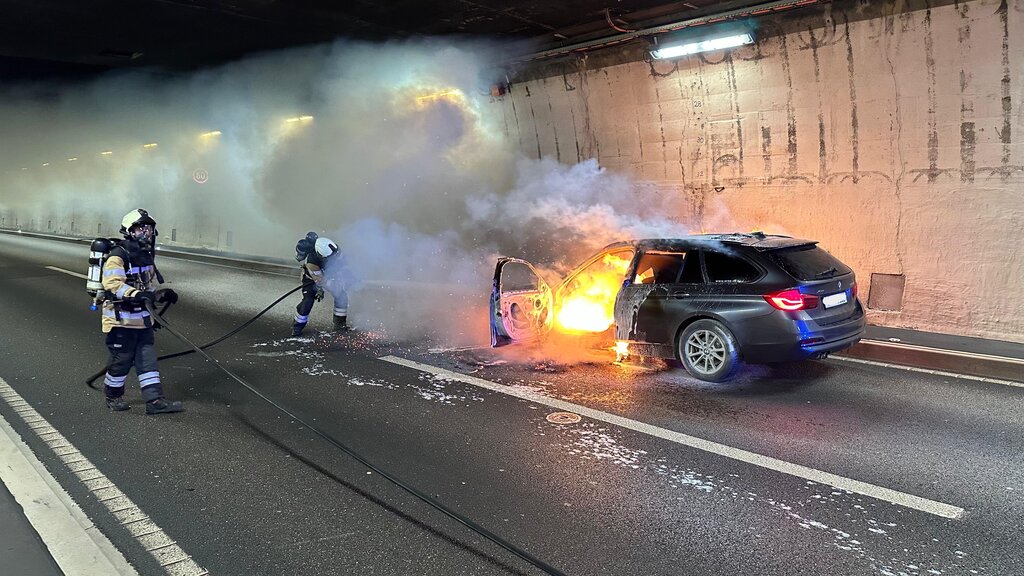
Monday afternoon, shortly after 15:30: In the Belchen Tunnel on the A2 motorway, a grey estate car travelling in the direction of Basel catches fire. As the firefighters arrived, the vehicle was already fully engulfed in flames. Thick smoke quickly fills the tunnel. The fire service quickly brings the fire under control, but the tunnel must be completely closed in both directions while the firefighting and rescue operations are carried out. It takes around 90 minutes for the opposite tunnel tube (towards Bern/Lucerne) to reopen; the affected direction of travel towards Basel remains closed for three hours. Fortunately, no one is injured. Nevertheless, this incident is a prime example of how safety sets the pace: Until everything is safe, traffic will remain at a standstill.
Correct behaviour in tunnel fires
A tunnel fire is an extraordinary situation. This makes it all the more important for drivers to react correctly immediately. Official behavioural guidelines issued by the Federal Roads Office (CH) emphasise: Never turn or reverse! Instead: Whenever possible, pull over to the side of the road, turn off the engine, leave the ignition key in the ignition, switch on the hazard warning lights and leave the car immediately (do not forget any animals in the boot). You should then proceed as quickly as possible to the green-marked emergency exits and leave the tunnel via these. The best way to warn other road users is to use hand signals or the horn shortly before stopping. Attempting to extinguish the fire yourself with a fire extinguisher is only advisable in the early stages of a fire. If the vehicle is already fully ablaze, get yourself to safety and leave the firefighting to the fire service.
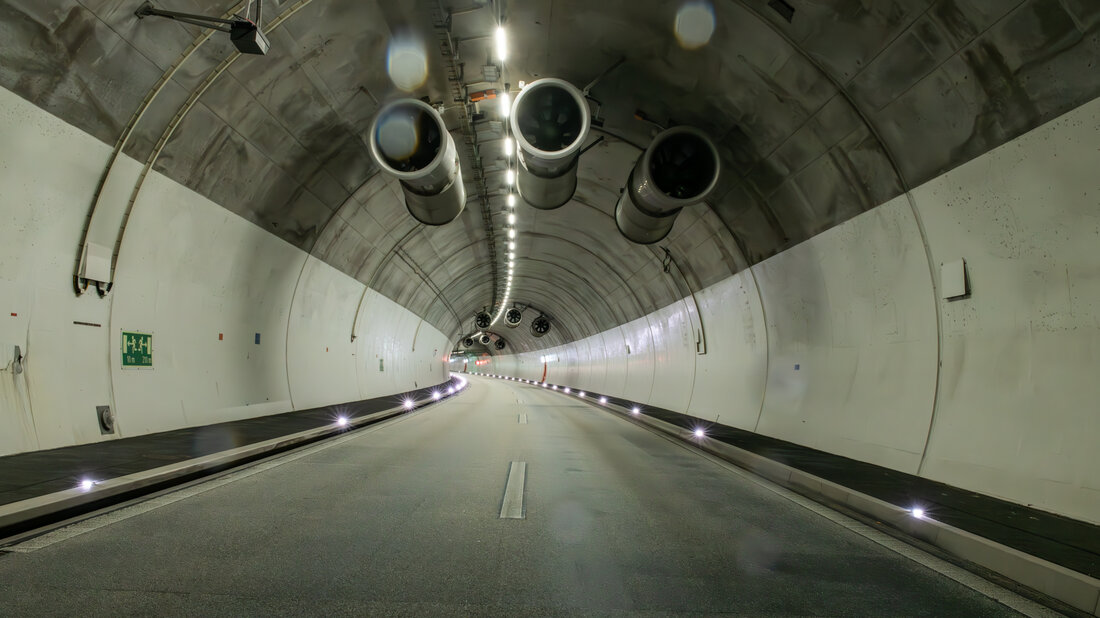
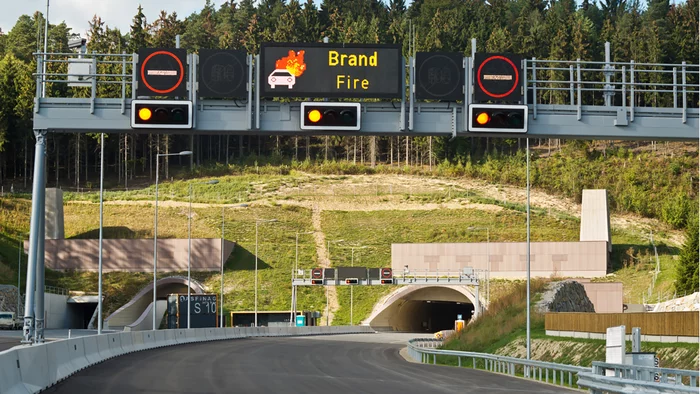
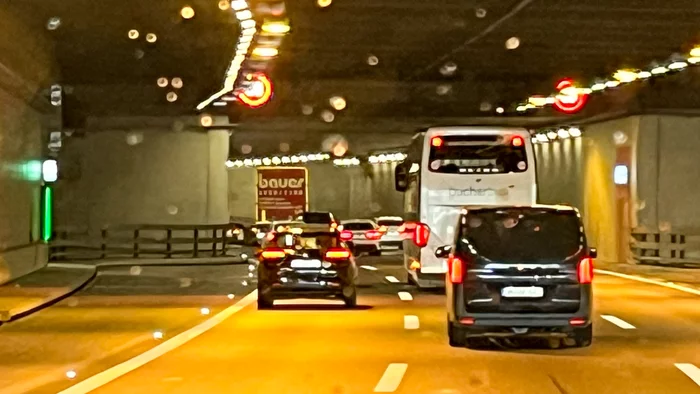
As a precautionary measure, the following applies before and during travelling through the tunnel: Switch on your low beams, turn on the radio to listen to traffic reports and pay attention to road signs. In traffic jams, be sure to use your hazard warning lights and keep a sufficient distance from the car in front (at least 5 metres) to make room for emergency vehicles. If you are asked to stop in the tunnel (e.g. by traffic lights or announcements), you must comply; the traffic control centre can stop traffic immediately in the event of danger. Modern road tunnels have traffic lights, barriers or illuminated signs that turn red in an emergency, preventing other vehicles from entering. This technology was immediately put into action in the Belchen Tunnel, for example, when the fire alarm system was triggered. For all persons already in the tunnel, this means: Remain calm and follow the instructions.
Emergency exits in tunnels are clearly marked with green signs. They lead either to a shelter, a secure parallel tunnel, an emergency tunnel or even directly to the open air. When fleeing on foot, avoid walking through smoke if possible. However, if the smoke is so thick that the nearest exit can only be reached through a layer of smoke, you must keep low, use the wall for orientation and leave the tunnel as quickly as possible via an emergency exit. Important: Never run towards the centre of the carriageway or back to the vehicle. The nearest emergency exit is usually not far away, even if it seems further away than it actually is in thick smoke. It is better to spend a few seconds locating an emergency exit sign than to run aimlessly through the tunnel in a panic.
Self-rescue is the top priority
Why all these rules of behaviour? Because every minute counts in a tunnel fire. In the event of a fire, the priority is for road users to rescue themselves. Modern tunnels are equipped to support self-rescue: clear escape route signage, emergency lighting, emergency telephones, ventilation systems and emergency exits create the conditions necessary for trapped individuals to rescue themselves, because even the best-equipped fire service needs time to reach the scene. Every tunnel user may be on their own until help arrives, so it is important to react correctly.
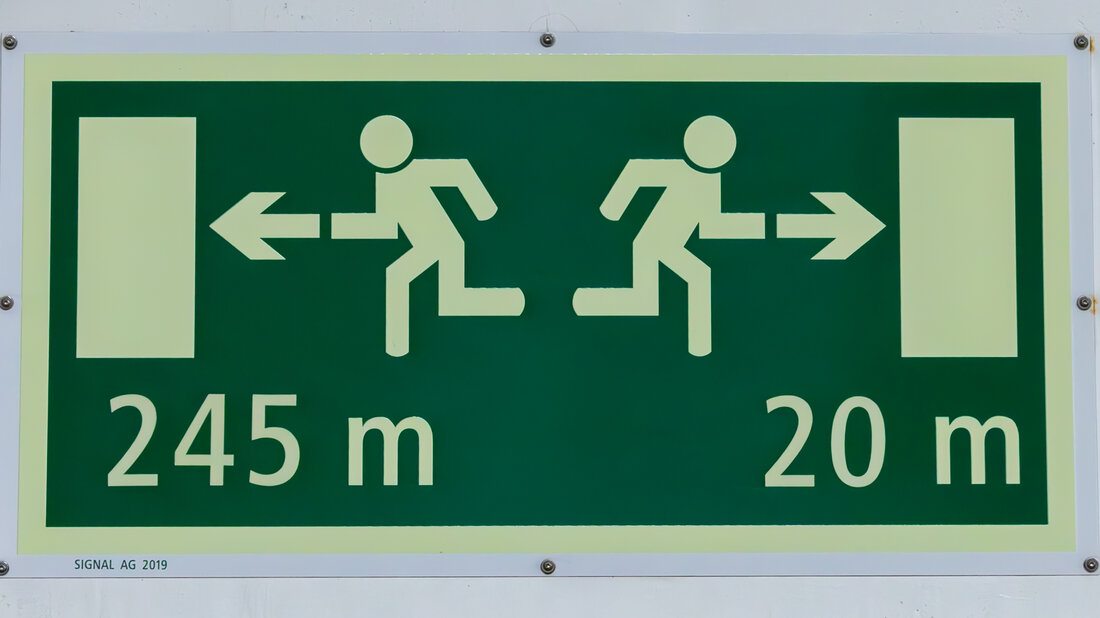
However, experience shows that people do not always behave ideally when under stress. The evaluation of tunnel incidents has shown: Tunnel users do not necessarily follow the designated escape routes. They try to use every means to get out of a tunnel: turning their vehicle around, getting into other vehicles, and making escape attempts on foot through the tunnel tube to the portal. Some even hesitate to leave their car at all, out of concern for their valuables or because they believe help will arrive at any moment. This natural behaviour can be life-threatening. Therefore, follow the instructions and, in the event of a fire, leave your vehicle immediately and head for the emergency exit. Your car is replaceable, your life is not.
How the fire service works in tunnels
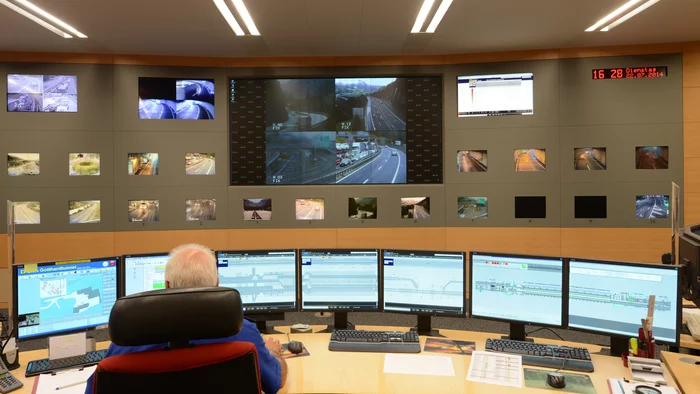
A well-rehearsed rescue plan is put into action behind the scenes in the event of a tunnel fire. The traffic control centres monitor traffic around the clock. If they detect smoke, heat or a car on fire, automatic systems raise the alarm. Immediately, the responsible fire services are dispatched. In Switzerland, these fire services deploy specially trained incident commanders and firefighters equipped with breathing apparatus and appropriate equipment. Many cantons operate firefighting and rescue vehicles specifically for motorway tunnels, which are often more compact in design to enable them to manoeuvre in narrow tunnel profiles. At the same time, tunnel ventilation plays a crucial role: it is controlled so that smoke is blown or extracted away from people and, ideally, in one direction out of the tunnel. The ventilation allows tunnel carriers to create a smoke-free escape zone on one side of the fire and makes it easier for the fire service to access the site.
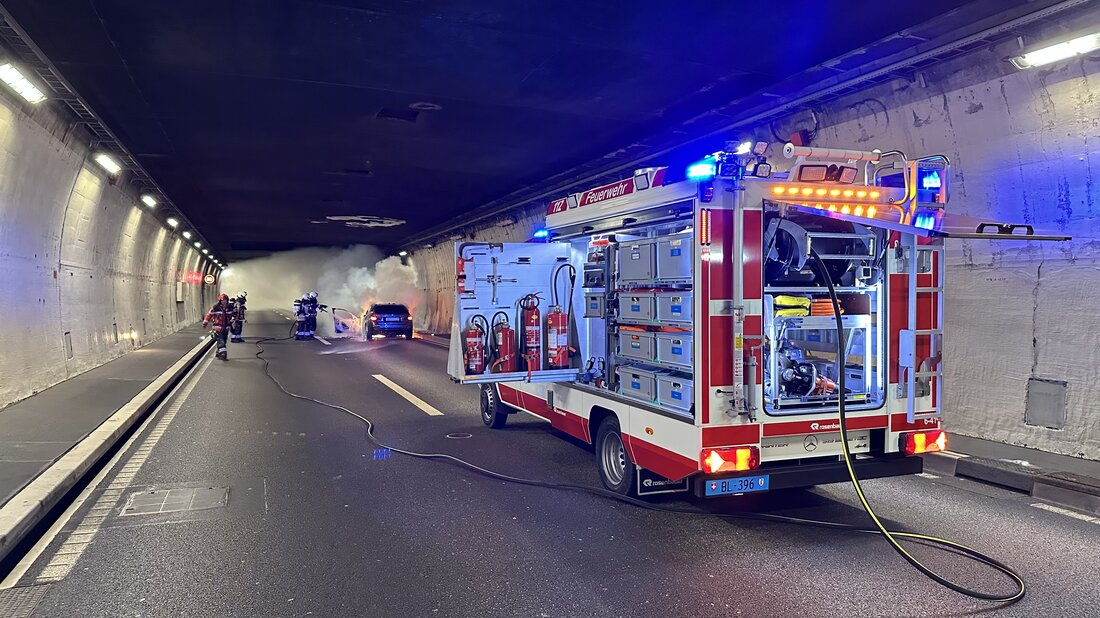
The fire service's first priority is always to rescue people. Teams wearing breathing apparatus are systematically searching the tunnel for people. Due to the various escape behaviours – some remain with the vehicle, others may run along the tunnel wall or hide out of fear – the firefighters must search all areas. They check every nook and cranny, open emergency niches and technical rooms, and search under parked vehicles to ensure that no one is overlooked. At the same time, particular caution is required: It can always happen that a driver decides to flee in their car at the last second. Therefore, firefighters in the tunnel always expect to encounter moving vehicles during an operation. This combination of rescue and self-protection requires a high degree of professionalism.
The fire attack begins in parallel with the search. In national road tunnels, fire hydrants are available to the fire services every 150 metres. In addition, the fire services bring along so-called fire apparatuses. Equipped with firefighting gear, thermal imaging cameras, and other equipment, they advance toward the seat of the fire, while other teams approach from the opposite direction, provided the tunnel is accessible from both ends. This attack from two sides offers more tactical possibilities, but requires clear coordination and reliable communication. It is where the specialised Swiss training pays off: At the International Fire Academy in Balsthal, co-financed by the Basellandschaftliche Gebäudeversicherung, among others, firefighters from all over Switzerland (and Europe) train for tunnel incidents in realistic conditions. In training tunnels with real fires, they learn tactical procedures, ventilation management, search techniques in smoke and firefighting under extreme conditions. This training has significantly increased safety in tunnel fires.
Why both tunnel tubes are often closed when fire occures
As happened in the Belchen Tunnel, both tunnel tubes are often closed to traffic in the event of a tunnel fire. There is an important safety reason behind this: Keeping people safe and access routes. In many modern twin-tube tunnels, the tubes are connected by cross passages that serve as escape routes. If there is a fire in tube A, people usually escape via the emergency exits into the neighbouring tube B, which must, of course, be free of danger. If traffic continued unimpeded, those evacuating would be at risk. In addition, firefighters often use the unaffected tunnel tube as an access point for their operations: For example, the fire service can drive up to a cross passage from the opposite side and advance to the fire from there. A temporary complete closure of both tunnel tubes is therefore an essential part of the operational plan to ensure uninterrupted rescue operations and safe self-rescue. Only when the situation is under control, for example, when the fire has been extinguished, and the smoke has cleared, will the unaffected tube be reopened as quickly as possible.
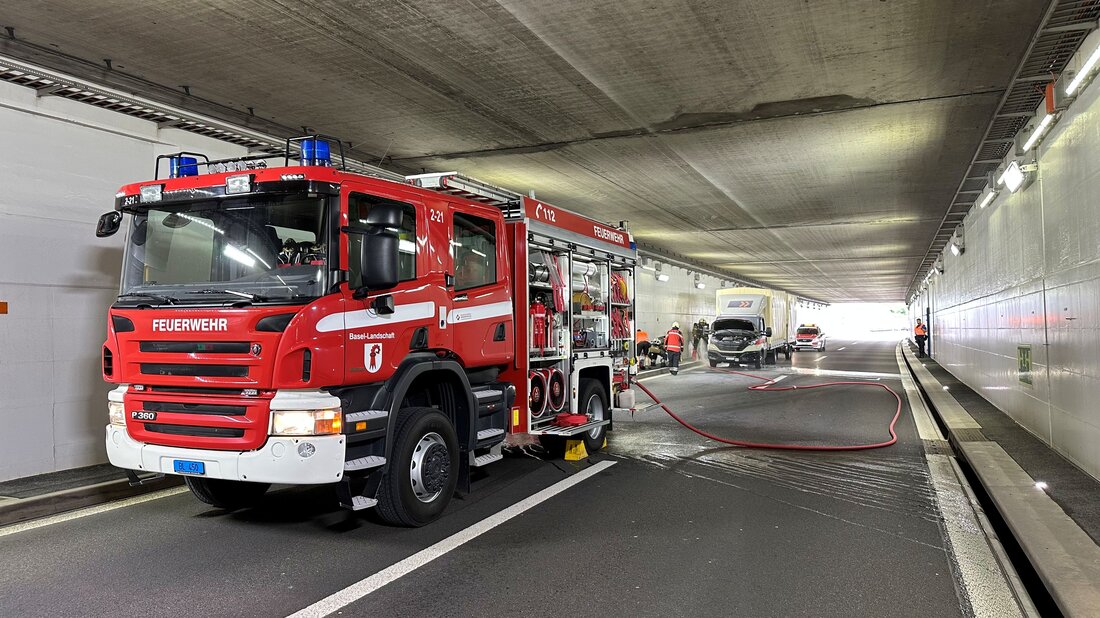
Another aspect is smoke propagation: Depending on the tunnel ventilation system, smoke can also enter the neighbouring tube via cross passages or ventilation shafts. The complete tunnel closure prevents drivers from entering a dangerous cloud of smoke. In the event of an incident, automatic systems set the traffic lights in front of Swiss national road tunnels to red to stop all traffic.
Dangerous misconceptions: What many people misjudge
Experience from real incidents and drills reveals some common misconceptions that motorists have:
«I can still quickly drive through the smoke.»
Wrong! Even a few breaths of hot smoke can be fatal. In thick smoke, you can't see anything, lose your sense of direction and risk an accident or smoke inhalation injuries. In fact, some drivers still try to drive past a burning or smoking vehicle. But this escape attempt is life-threatening – smoke and heat spread faster than expected. The only correct decision: Stop immediately and flee on foot to the nearest safe exit.
«I'm protected in the car and can wait it out.»
This impulse is understandable, but deceptive. The car does not offer adequate protection against toxic fumes – on the contrary, it can become a trap. In addition, valuable time would be lost. Waiting for help to arrive puts you in unnecessary danger. The fire service emphasises that every minute counts, and they themselves do not hesitate for a second. The service expects people to make late decisions and is trained to search for victims even in stationary vehicles. It is better to get yourself to safety as soon as the situation allows.
«Others react correctly – I can follow the crowd.»
Panic can lead to inappropriate reactions within the group. For example, there have been cases in which several people stayed in the tunnel, comforting each other or even running back towards the portal instead of taking the nearest emergency exit. Therefore, do not mindlessly rely on others' behaviour; follow the signposted escape routes. Each tunnel tube is equipped with several emergency exits. Use them regardless, even if others hesitate.
«The fire service will find me, no matter where I am.»
The fire service will search every nook and cranny, but bear in mind: In a long tunnel, minutes can seem like hours when you are trapped inside. Do not make it unnecessarily difficult for the rescuers. Actively proceed along the nearest escape route, make contact via the emergency telephone (these are available every 150 to 300 metres) and provide your location if possible. You will significantly increase your chances of survival.
Conclusion
The vehicle fire in the Belchen Tunnel on 11 August 2025 ended without serious casualties, thanks in part to modern safety systems, rapid fire service intervention and the correct behaviour of those involved. Such events demonstrate that when it comes to tunnel safety, everyone has a role to play: The Basellandschaftliche Gebäudeversicherung and the Federal Roads Office are continuously investing in better technology and training, fire services train for deployments at the International Fire Academy, and road users themselves must know and follow the rules of conduct. When a fire breaks out in a tunnel, safety is paramount, and everyone must be ready to take decisive action at the right moment.