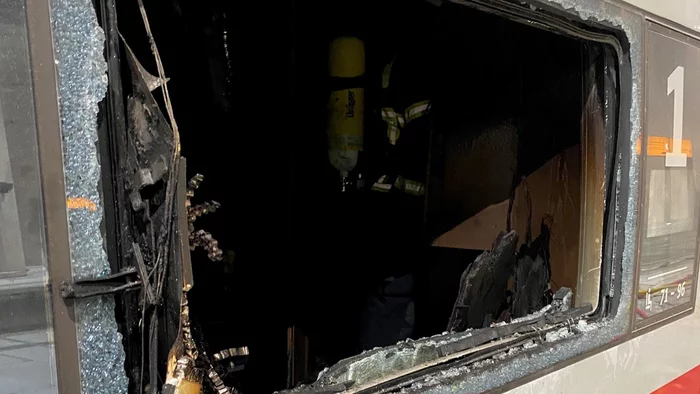


Due to noise barriers on both sides of the railway line, the 10 km-long railway line through the Lower Saxony town of Wunstorf (D) is almost like a tunnel. The barriers made it considerably more difficult to reconnoitre the fire that broke out in a freight wagon on the night of 26 September 2023. Dennis Heidorn, who commanded the operation as deputy fire chief, and Marvin Nowak, press spokesman for the city fire service, describe the sequence of events and the lessons learned in this magazine article.
Challenge: Reconnaissance
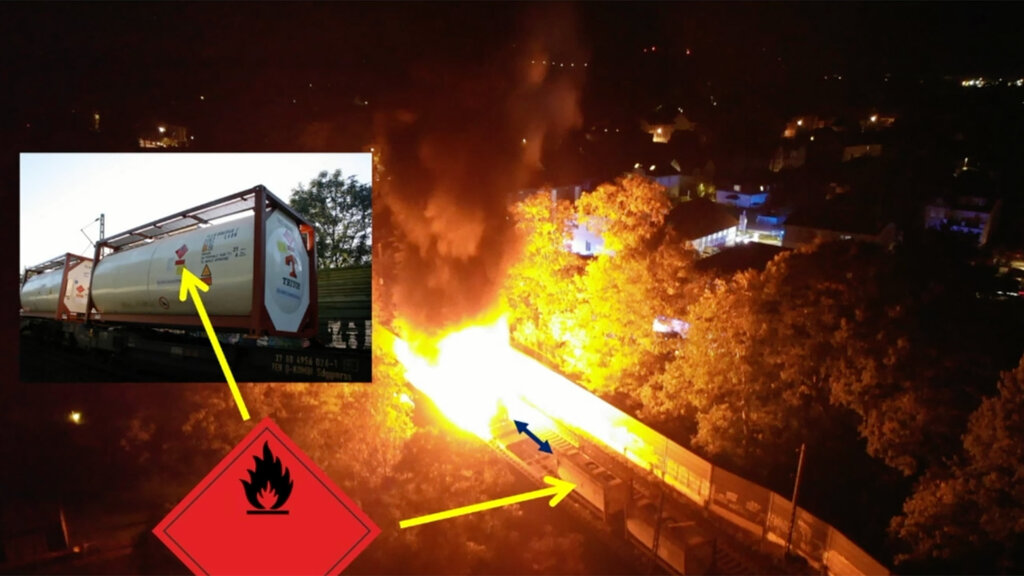
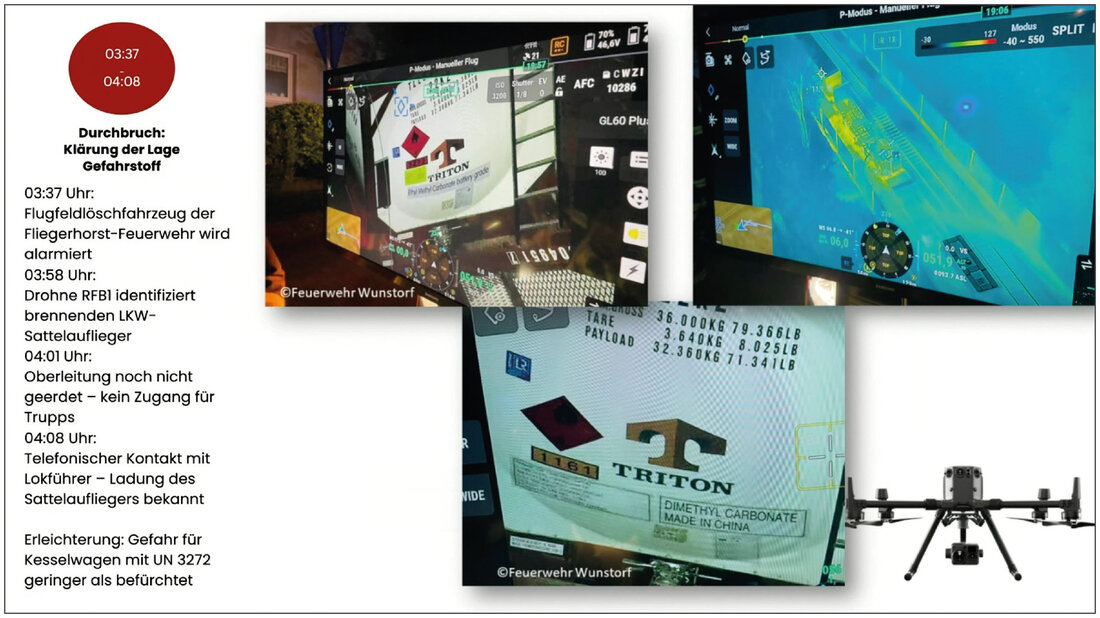
When the commander of the Wunstorf fire service arrived at the scene five minutes after the alarm was given at 2:41 a.m., the fire between the noise barriers was visible from a distance. However, quick access to the fire scene was not possible. A drone was therefore used for reconnaissance. It turned out that the drone camera's resolution was sufficient to identify a hazardous materials sign on a tank wagon in the immediate vicinity of the fire, but not to read the UN numbers at a greater distance.Depiction of the noise barriers along the railway line through Wunstorf
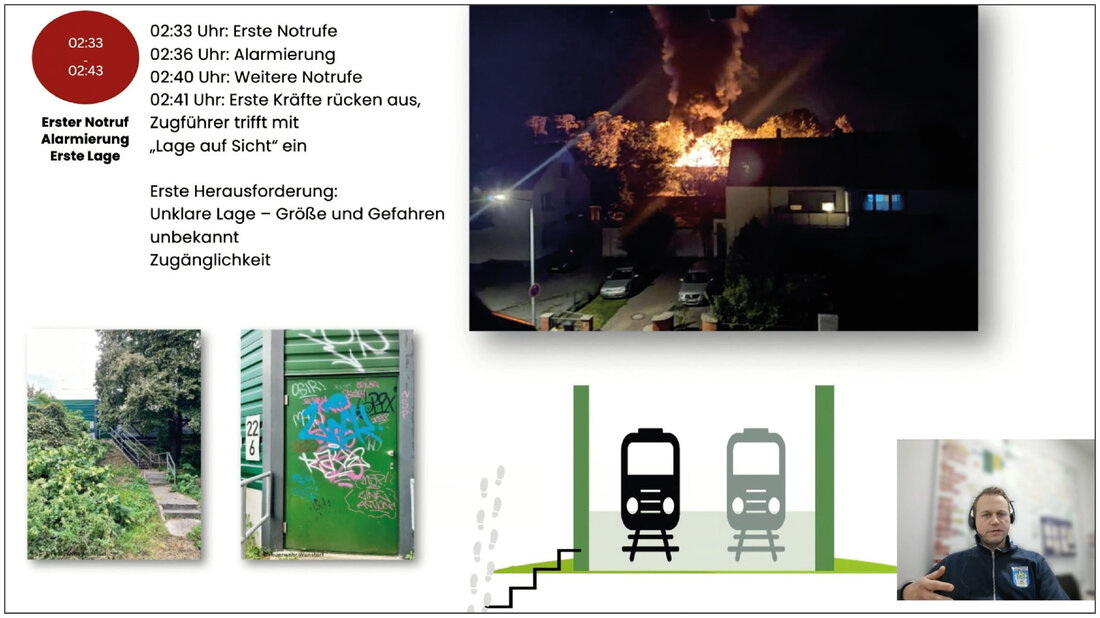
Furthermore, it was not possible to determine whether substances had already leaked from neighbouring tank wagons, for example, due to a melted seal. Smoke and heat levels, as well as weather conditions, prevented a closer fly-by to assess the situation around the fire scene and the endangered wagons in the vicinity. Thus, for a long time, it remained unclear how the dangerous situation should be assessed.
First attack with water just 10 minutes after alarm
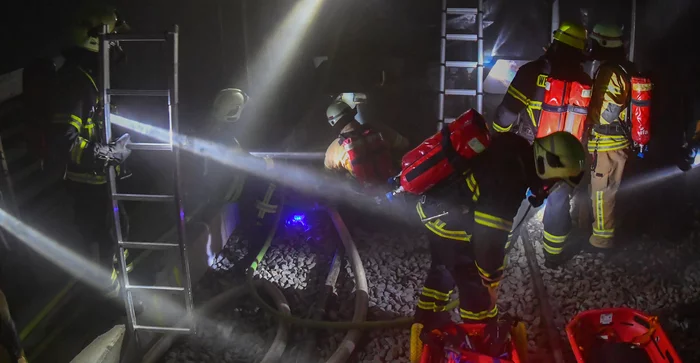
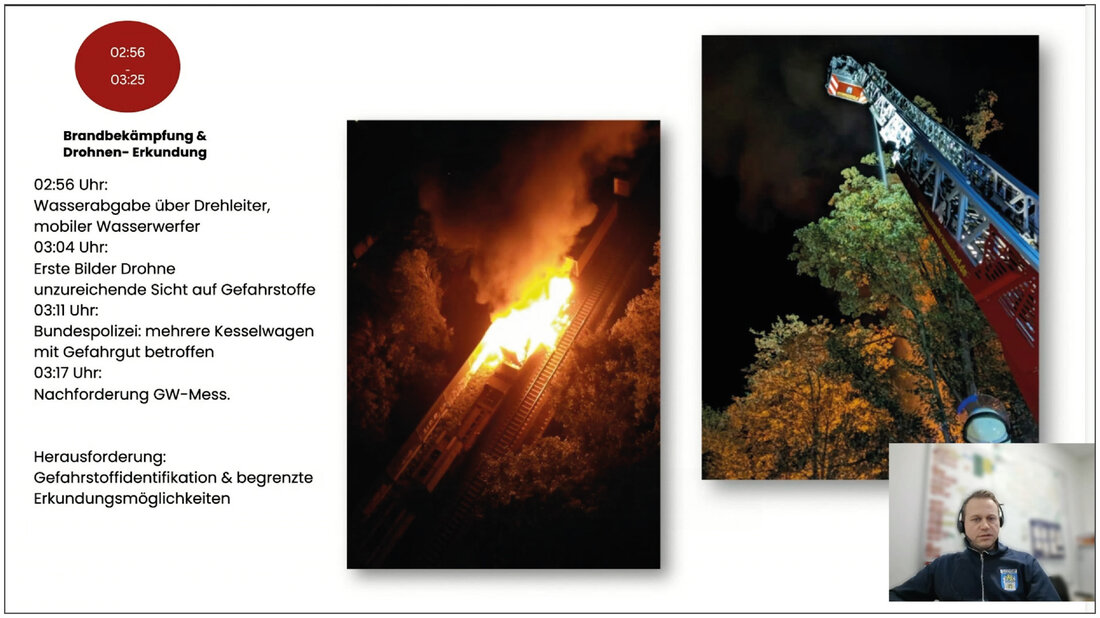
As the overhead line had fallen to the ground along the entire length of the fire and beyond, the first attack was launched using an aerial ladder. A fire apparatus with a roof-mounted monitor and a mobile monitor were positioned on a dirt road on the other side of the railway line to provide support. Here, the drone was used to align the water jet from the water monitors precisely.
Lucky break: The gap between the fire and the tank wagon
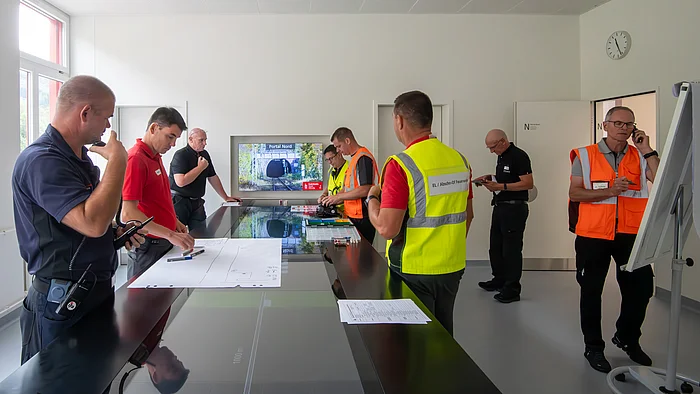
During the operation, the incident command received important information about the train composition. To verify this information and assess the situation, the train had to be surveyed by drone over a 1.5 km length. It turned out that five tank wagons carrying hazardous materials were directly attached to the wagon with the fire. A gap between the burning lorry semi-trailer on this poket wagon and the hazardous materials tank wagon proved to be a stroke of luck during this operation.
Potential evacuation zone poses an extreme challenge
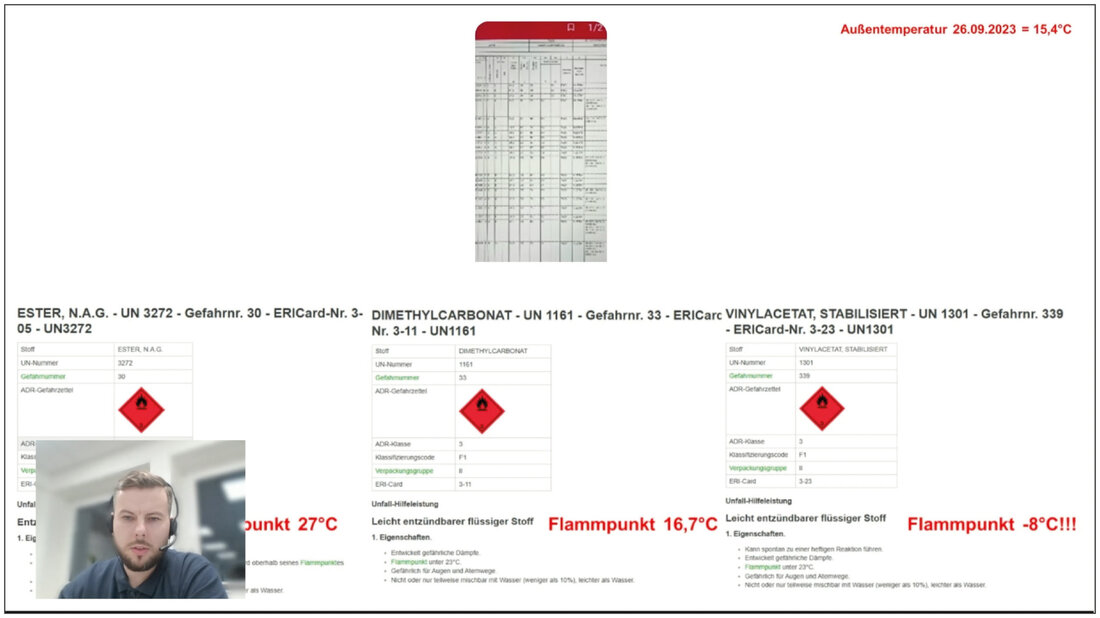
The flash points of the hazardous materials in the tank wagons attached to the wagon with the burning semi-trailer were 16.7 and 27 °C, respectively, while the outside temperature was 15.4 °C. In the event of a vapour cloud explosion caused by the release of one of the hazardous materials, a required safety radius of 1 690 m was calculated. According to this, the danger zone included several elderly care and nursing homes, a forensic psychiatric hospital with a detention facility, the town hall, and the police, fire, and ambulance station. That night, it was decided to evacuate only 65 people from the immediate danger zone because of the gap. Without the gap, the situation would have been different.
Lessons learned from the operation
Two years after the operation, the Wunstorf fire service is still dealing with improvements and replacement procurements, as these partly involve major investments. It thus became clear that a fire apparatus with a big water tank was also needed in the city centre. In addition to purchasing a new drone, it was decided to include the regional fire service's drone unit in the initial alarm response for defined alarm keywords. In addition, redundancies were defined for the situation Room and storage rooms that would have been located in the evacuation area.
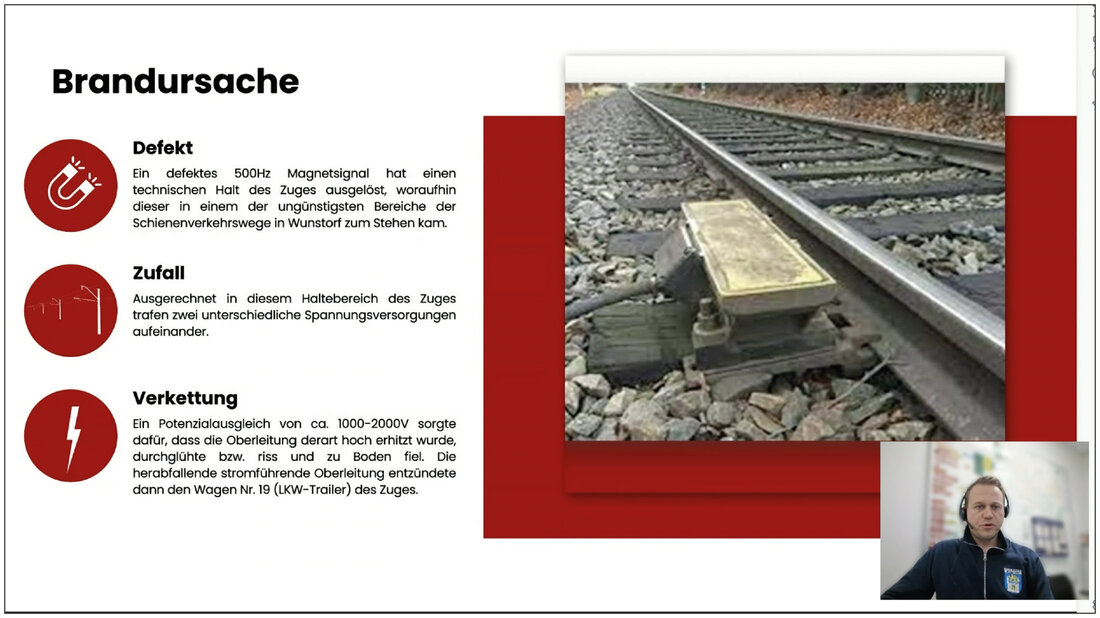
The emergency manager responsible for grounding the line during such an operation should be assisted by a fire service member during any future operations to ensure communication with incident command. In close consultation with DB Emergency Management, it was also decided to establish direct contact with the DB control centre during future operations. Looking back on the cause of the fire, Dennis Heidorn and Marvin Nowak sum up: «This operation has opened our minds to thinking in extraordinary scenarios too.»