

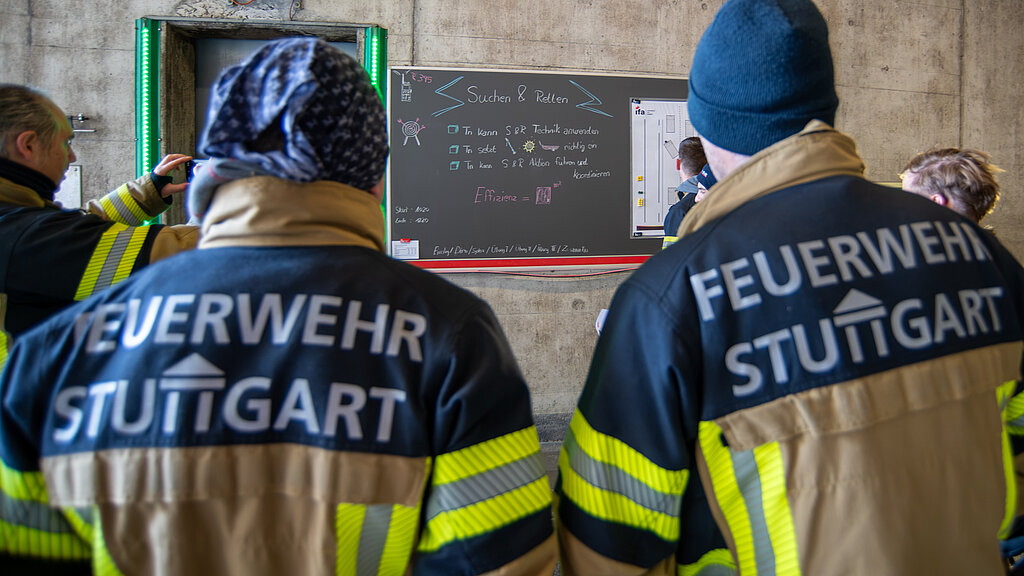
Some course participants feel unsettled when their fire service deviates in certain respects from the Tunnel Firefighting Procedure of the International Fire Academy, for example regarding team equipment. It raises the question of how binding our Procedure is. The answer is simple: it is up to the responsible fire service itself to determine how the training is put into practice during operational preparation and how to proceed in practice during an operation.
Team size as an example
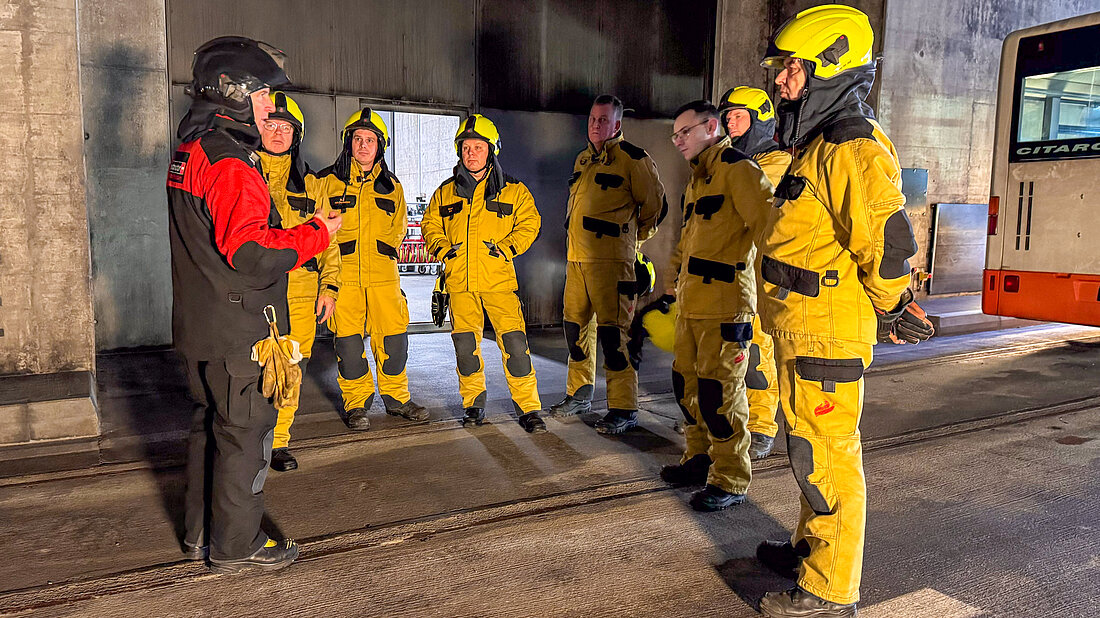
In its courses, the International Fire Academy teaches that three teams of two, plus a team leader, should be deployed to search railway carriages in a tunnel. When searching double-decker carriages, as many as four teams of two (with officer nine firefighters) are deployed during practical training. It also demonstrates how the task can be completed with fewer people, but it takes longer.
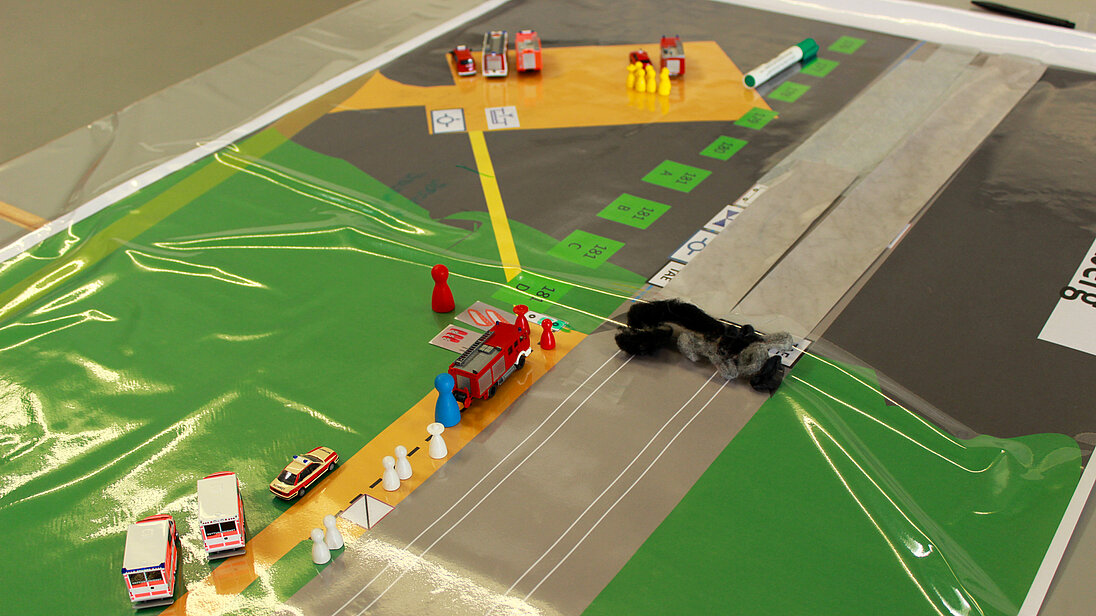
If a local fire service has a different operational structure in place – for example, operating solely with fixed teams of four firefighters and one officer – this causes a great deal of uncertainty: What is taught at the academy differs from what is actually practised at the station. Who is right? The instructor or one's own command?
Implementation is the responsibility of the fire services
As a general rule, implementing our Procedure is the responsibility of the fire services or the relevant authorities. The Swiss Fire Service Inspector Conference (SFIK) had approved the International Fire Academy's Tunnel Firefighting Procedure as the mandatory basis for training of Swiss fire services. Swiss fire services draw their own conclusions as to what applies to them in their operations.
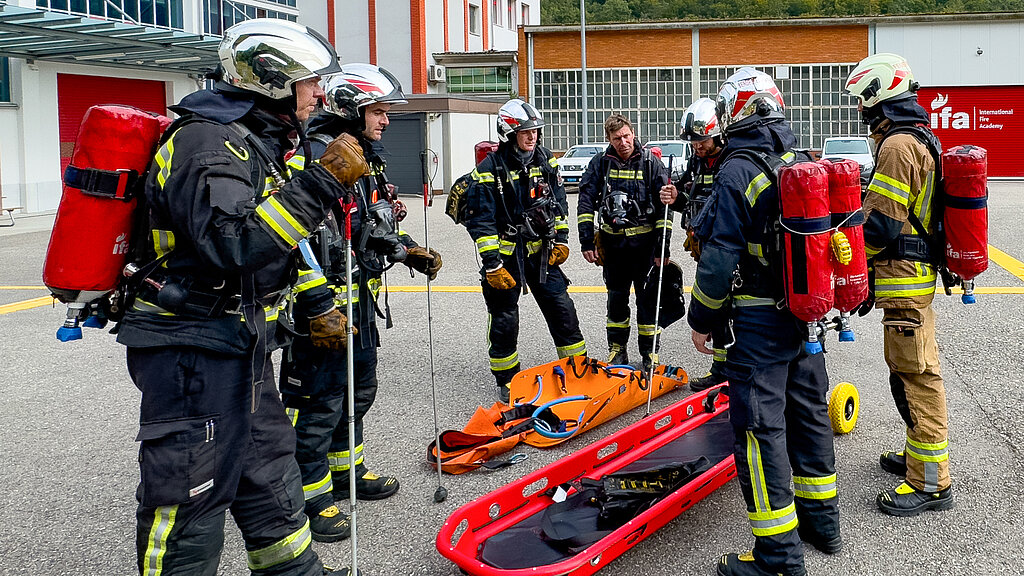
In Baden-Württemberg, to give just one example, the State Fire Service School has published «Recommendations for operations in railway tunnels». Accordingly, in the aforementioned example, at least four teams of four firefighters and one officer are required per portal. However, depending on the specific situation, «significantly more personnel must be made available». The exact number and configuration are ultimately the responsibility of the relevant fire service. What applies to the fire services is what they have set out for themselves, not what we teach them.
We very rarely say «You must!»
Most of what we teach should be taken as advice. We teach how one should (!) operate to carry out the relevant tasks, first safely and second efficiently. «Efficient» means: with the least possible expenditure of effort, resources and time. You do not have to use search sticks. Nevertheless, this is what you should do if you want to search large areas as quickly, reliably and with as little effort as possible.
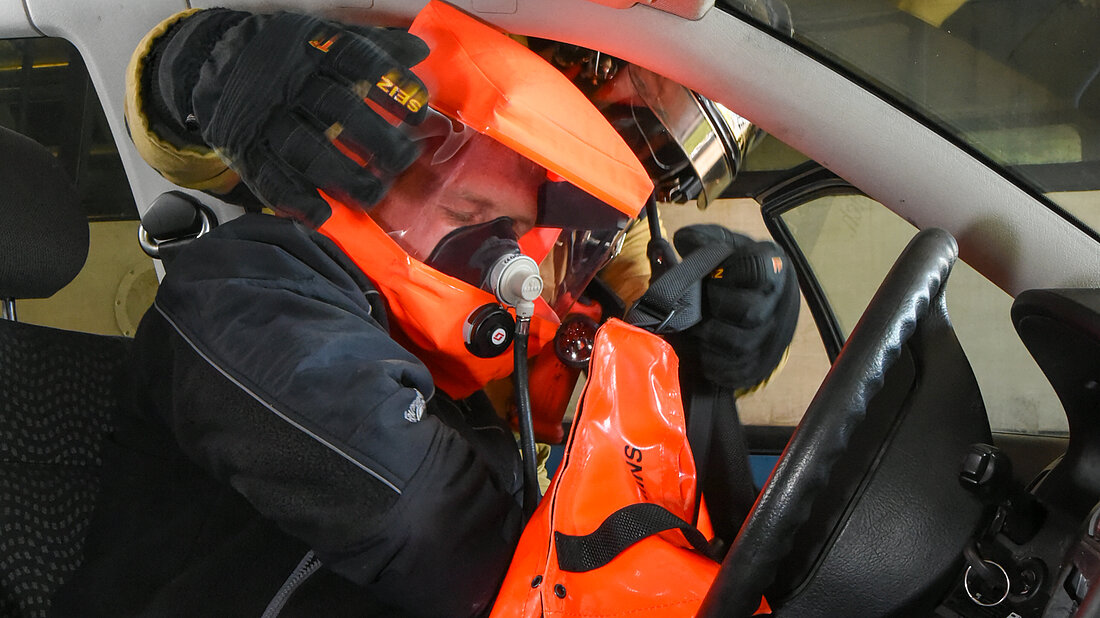
We rarely say that something needs to be done: rescue hoods must be ready before a vehicle engulfed in smoke is opened. Because if smoke enters the passenger compartment after the vehicle has been opened and rescue hoods are not immediately fitted to the people being rescued, they will be exposed to the smoke for an unnecessarily long time, and that can have fatal consequences.
Adapting to local conditions
A great many of our teachings need to be adapted to local circumstances. For example, we recommend that, in the event of tunnel fires, operations should always be carried out from both ends of the tunnel, which usually requires deploying at least two fire services. However, if the nearest fire station is 30 kilometres away on one portal side, a site- or facility-specific solution is required for a two-sided attack.
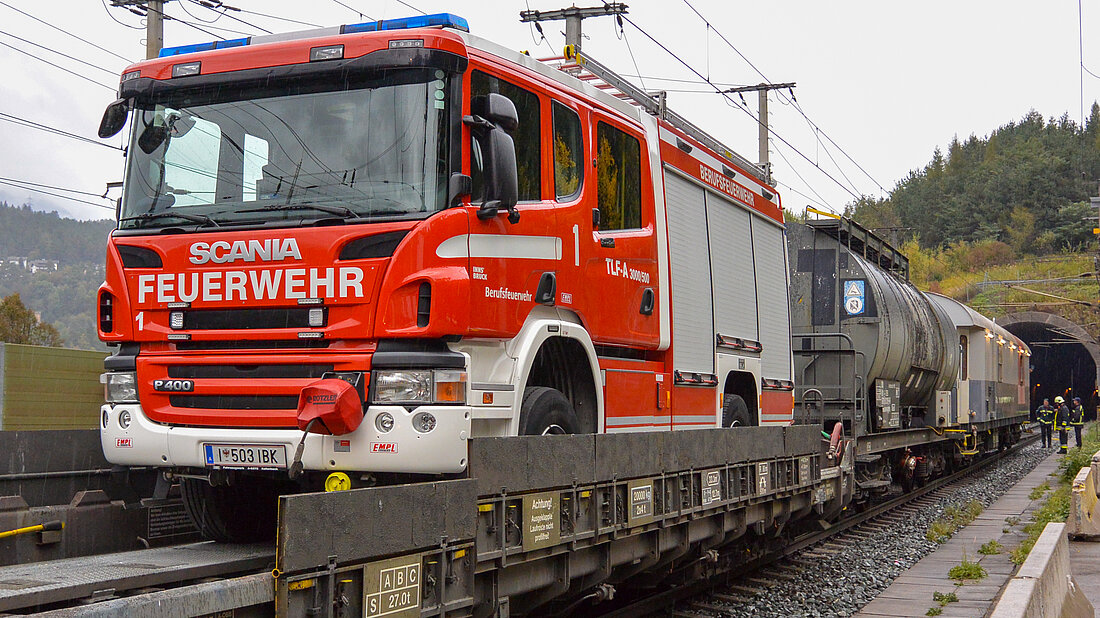
The solution will vary considerably depending on the number of tubes and lanes involved and whether, for example, side access roads can be made available. We can help fire services to develop such solutions. In our day-to-day training activities, we are generally unable to accommodate such special cases.
Why learn something that is not implemented?
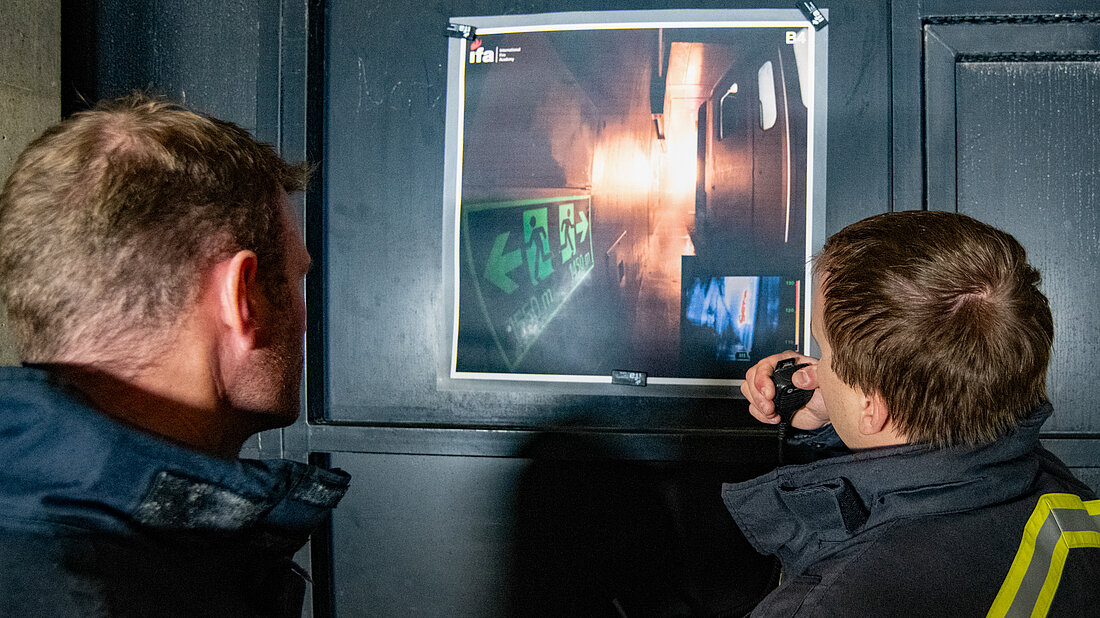
We know that some fire services do not assign reconnaissance teams because, as they explain, they will not have sufficient personnel available for this task in the initial phase. Consequently, we are often told that firefighters from such services do not need to learn about reconnaissance. We believe otherwise. In any case, the reconnaissance lesson is useful because it helps develop perception and practise clear communication. In addition, knowledge about tunnel systems and infrastructure is taught. All of this also helps to find one's bearings in the tunnel and get a quick grasp of the situation.
«Recommendation» does not mean arbitrariness
The fact that we regard the majority of our training programmes as recommendations does not mean that their content can be implemented however one pleases. On the contrary: one of the overarching aims of our training is to ensure that all emergency services personnel work in at least a similar manner and that their decisions and actions are compatible. It is all the more important given that, during tunnel operations, several fire services typically work together – even if they come from different fire service systems or even different language regions.
We are not a regulatory authority
It is not the role of the International Fire Academy to check whether and how the teachings are put into practice locally. Responsibility lies with the fire services and the relevant authorities and regulatory bodies. We aim to demonstrate how tunnel firefighting operations can be carried out safely and efficiently, and which principles and guidelines are essential for this and should therefore be observed by everyone. If this is achieved, it will be possible for all those involved to work together effectively, even after all local adjustments have been made.