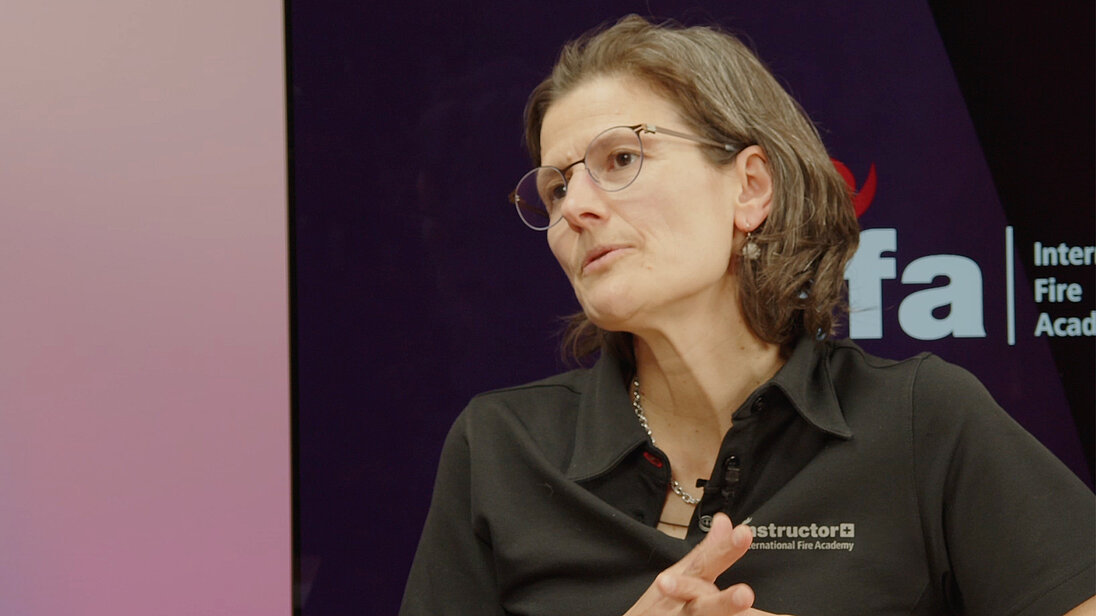
Training within the fire service has become more demanding. Participants have higher expectations of training; the range of topics has broadened; and because firefighters stay with their fire service for shorter periods, available knowledge and experience are lost more quickly. Marianne Wernli, Head of Training at the International Fire Academy, explains how her instructors tackle these challenges in their day-to-day training and what approaches have proved effective.
How participants find out which skills they want to improve
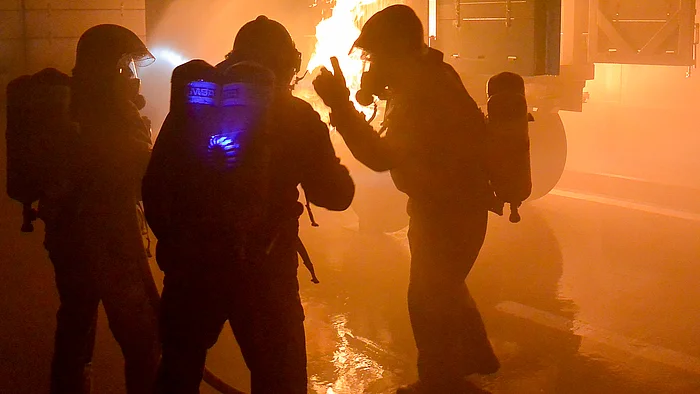
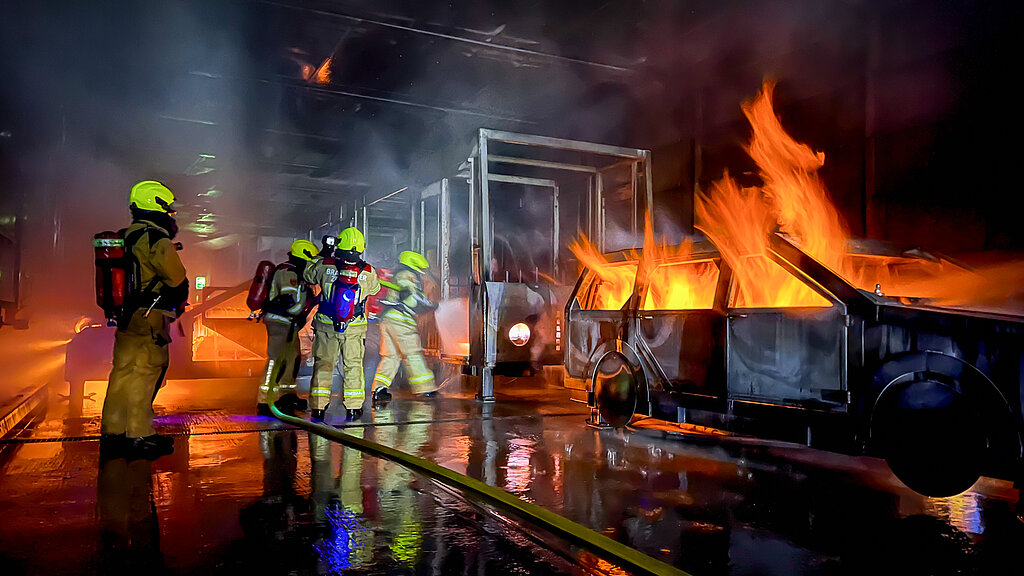
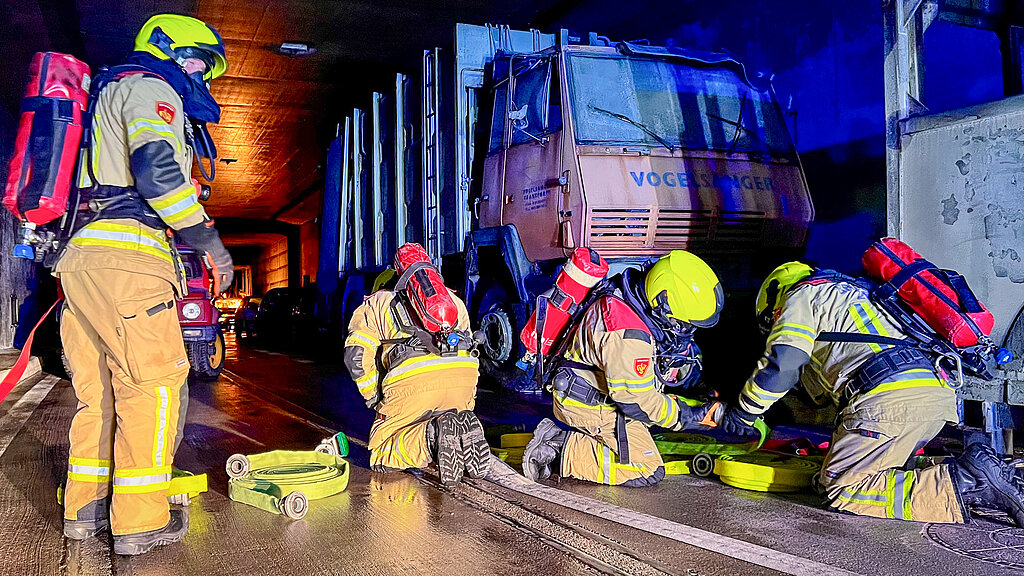
The introduction to the UTS training courses at the International Fire Academy is brief: a safety briefing, a few words on tactics, and some background information. The participants then get straight down to work. The first training drill is called «Ouverture» (which means «opening» in English) (see lead image). It gives participants a direct insight into what they are good at and what they are not (yet) good at. They realise what they can improve and where they are unsure or have questions.
It is not a question of identifying mistakes, but of addressing the issue at the right point
«Jumping straight into action isn’t about identifying mistakes,» emphasises Marianne Wernli. Rather, the aim is to provide participants and instructors with a common foundation upon which the knowledge and skills covered in the respective course can be built, to identify which issues need to be clarified, and to highlight what particular attention should be paid to during the subsequent practical training.
DATR as a formula for the learning process
The International Fire Academy uses the DATR model, a tried-and-tested approach in Switzerland (see box). «We start with an operational drill. We then assess the situation together with the participants: Participants identify what they are already able to do, where they have questions, and what has not worked as well as it could have. The in-depth training session will address these questions and highlight ways to improve and optimise these actions. In the training drill that follows (= review), they can consolidate what they have learnt.»
Feedback: Brief, and well-reasoned
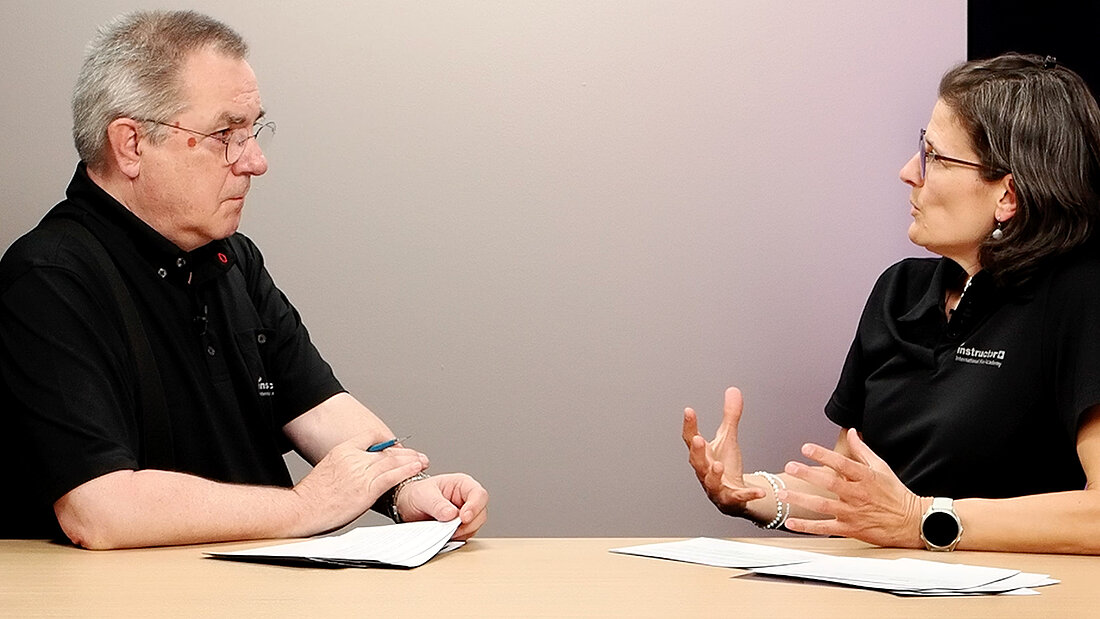
After the training drill, constructive feedback is important: «Everything important is said in 90 seconds,» says Marianne Wernli, «because hardly anyone can remember more than three specific suggestions for improvement anyway.» Marianne Wernli also offers a tip: «To ensure that the participants can embrace the feedback, it is not enough simply to tell them how they can do something better. It is equally important to explain why this improvement is important.»
The learning curve shows progress immediately
The progress made by each team formed by the participants is continuously assessed by the instructors throughout the course. In this context, several tasks are always assessed (e.g. reconnaissance, Search & Rescue, firefighting). The concept is simple: Performance on individual tasks is assessed as «unsatisfactory», «satisfactory», «good» or «very good» and plotted on a learning curve graph. «This allows us to see, as the course progresses, whether there is an improvement or not. If any of the learning curves plateau or even start to decline at a particular point, the instructors can react immediately,» says Marianne Wernli, explaining the concept.
The risk of accidents increases when concentration wanes
One observation that keeps recurring in the training courses is: Accidents during training courses usually happen when concentration wanes. «That is why we take great care to focus on the essentials and not to overload the courses with too much content. And before the final drill – that is, when the participants are already feeling a bit tired, and their concentration is waning – we make a point of urging them to focus once more. Think about what’s important. And then move on to the last drill.»
Carry out short sequences frequently helps rembering
When firefighters attend refresher courses, what they have learnt is first reactivated with short drills. It happens quite quickly during training. But in the heat of an operation, there’s no time for such «warm-up drills». Marianne Wernli therefore recommends practising regularly at home: «Short but frequent training sessions are best.»
Talk less, let people experience more
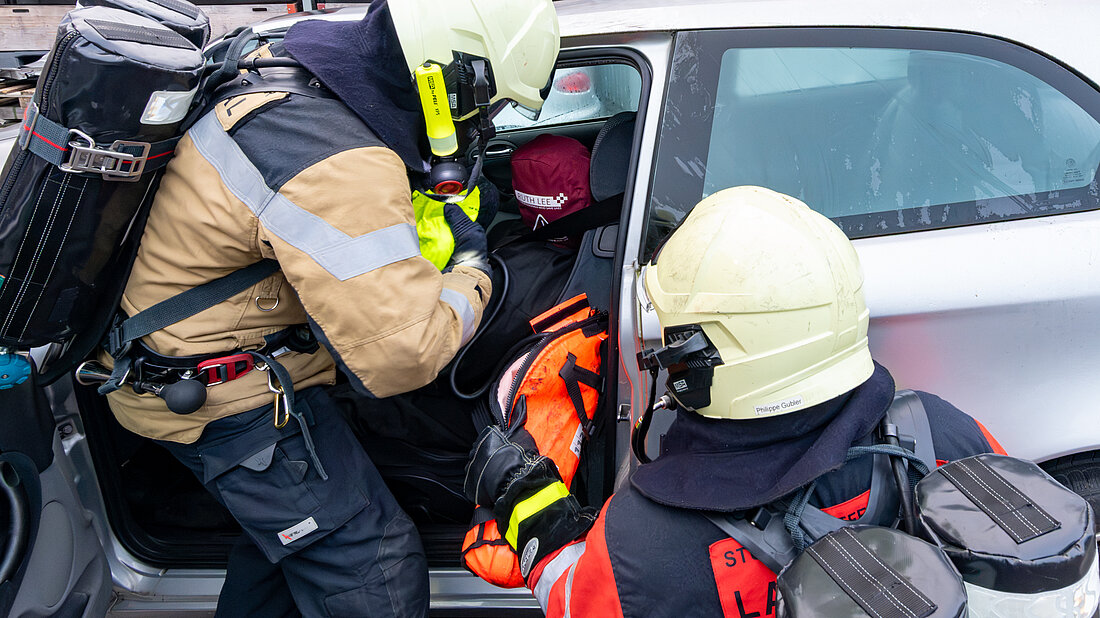
«Speak as little as possible; let them experience as much as possible» – that is Marianne Wernli’s motto and the advice she gives to all trainers. Of course, the objective of a drill must be explained: «But it should be brief and to the point,» says the head of training at the International Fire Academy.