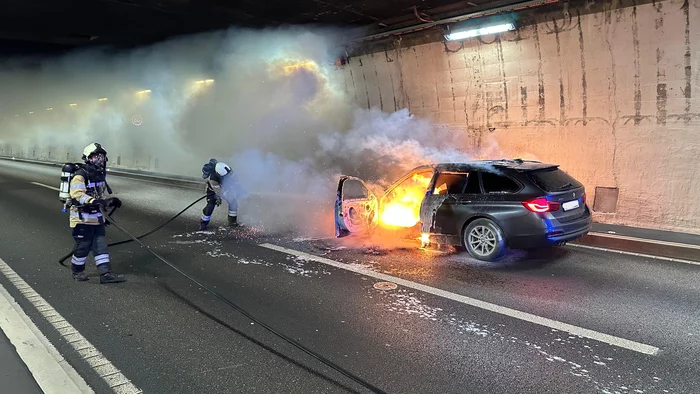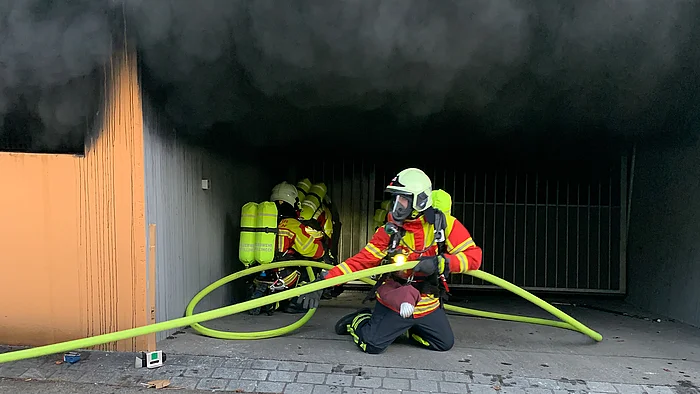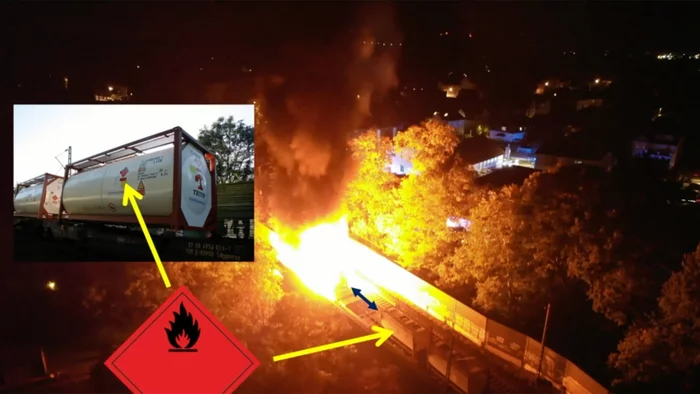


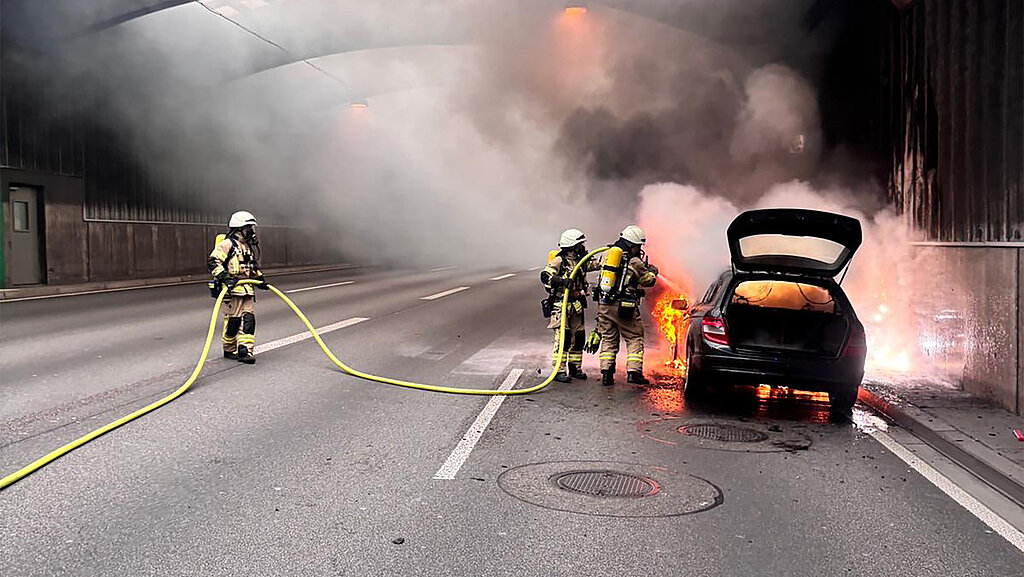
Amidst the Easter holiday traffic, a car caught fire on 2 April 2026 in the 1,552-metre-long Lövenich Tunnel in Cologne. Between 80,000 and 100,000 vehicles pass through this tunnel – which, in engineering terms, is an enclosure – every day. The fire service was alerted via an emergency call, resulting in the deployment of 22 vehicles and 70 firefighters and paramedics. Incident Commander Christian Langer details the specific circumstances of the incident.
Emergency vehicles can drive into tunnels
The train driver, who was the first to arrive at the tunnel, initially inspected the affected tunnel tube on foot and reported that he could not detect any smoke. As a result, a rescue fire apparatus and a tanker fire apparatus could drive into the tunnel. As they made their way towards the burning vehicle, the two occupants came towards them and said they had been alone in the car and that no one else remained in the tunnel.
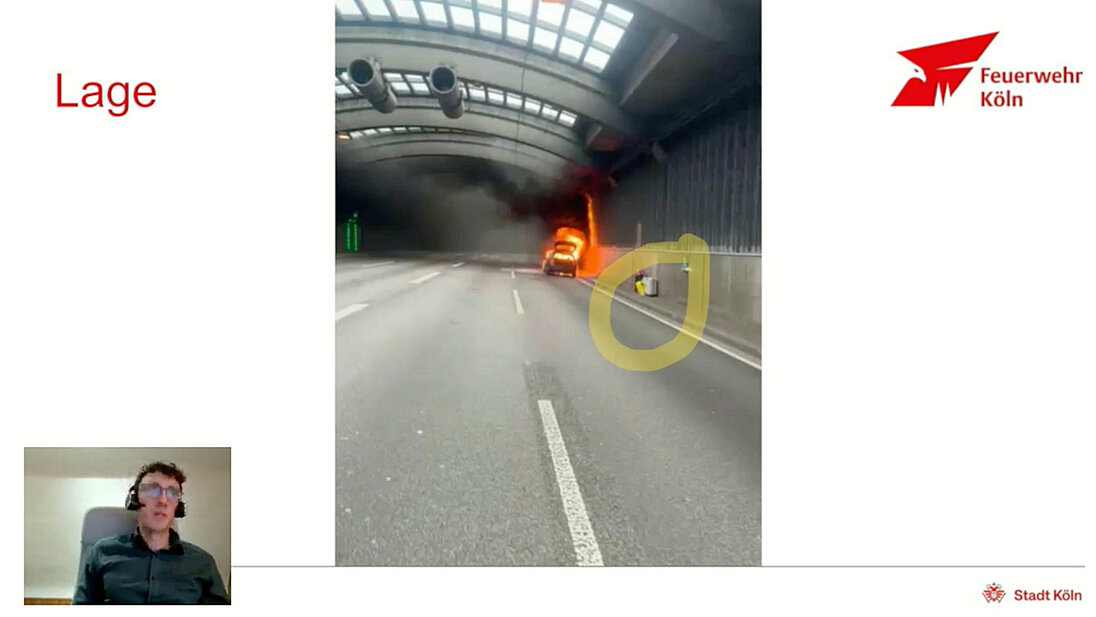
A sudden problem following a quick success in extinguishing the fire
The smoke moved towards the south entrance, and the vehicle was extinguished within a few minutes. But then the emergency personnel reported heavy smoke in the adjacent tunnel tube. There had been an unexpected incident of smoke recirculation at the portal. The emergency services' assessment was clear: You cannot be in the adjacent tube without a breathing apparatus. By that point, the smoke had already travelled about 1,000 metres.
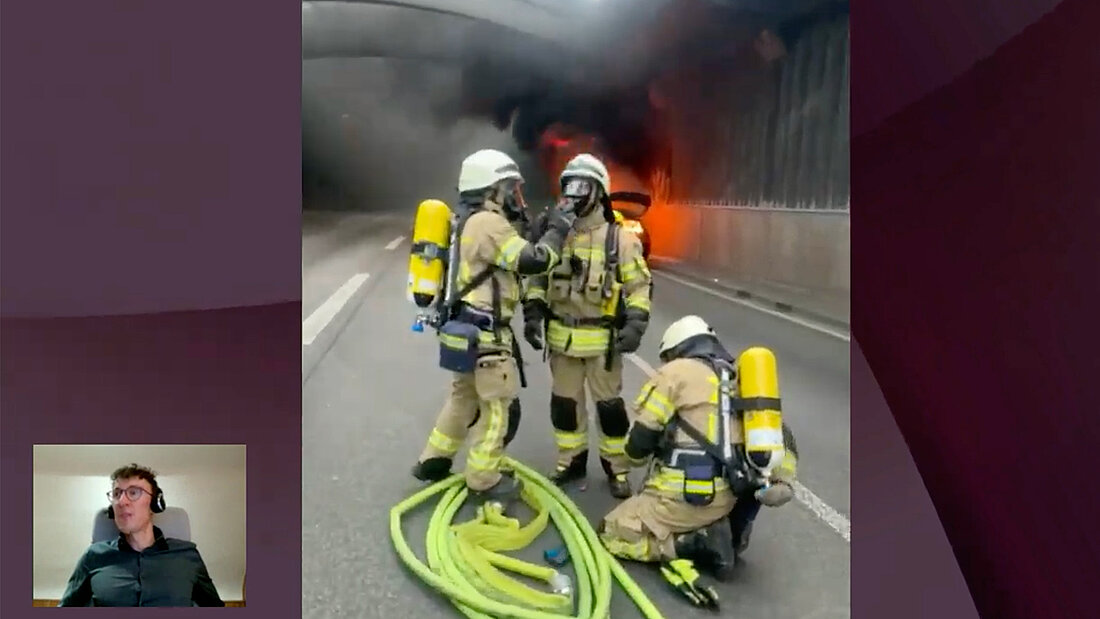
Unfavourable weather conditions prevented the smoke from clearing
Due to adverse weather conditions, including heavy rain and high humidity, Christian Langer decided at the start of the operation not to activate the smoke and heat extraction system in the tunnel tube affected by the vehicle fire. Based on his previous experience, he had assumed that escaping smoke would enter through the permanently open ventilation grilles of the adjacent tube. He had never experienced smoke recirculation at the portal before. Yet even there, the weather had not allowed the smoke to clear. Thus, the thick smoke could propagate into the adjacent tunnel tube.
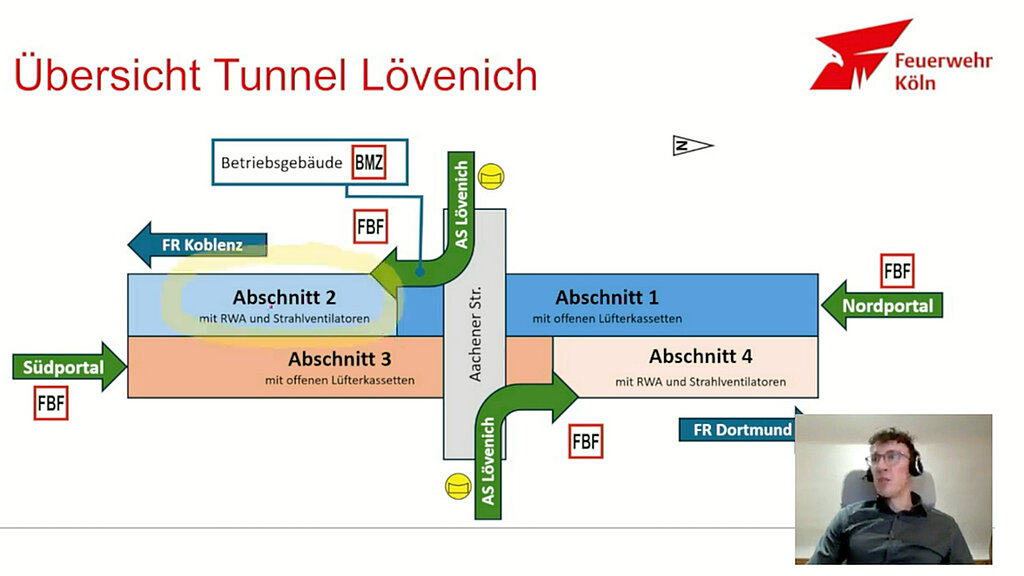
Smoke extraction by any means necessary
The main priority now was to clear the smoke from the opposite carriageway as quickly as possible, as traffic was building up across the whole city. The jet fans were switched on, the smoke and heat extraction system in the second tunnel section of the opposite tube was activated, and two firefighting support vehicles were deployed to assist with smoke extraction. After two hours, the adjacent tunnel tube was reopened to traffic; the tunnel affected by the fire was reopened around two and a half hours later.
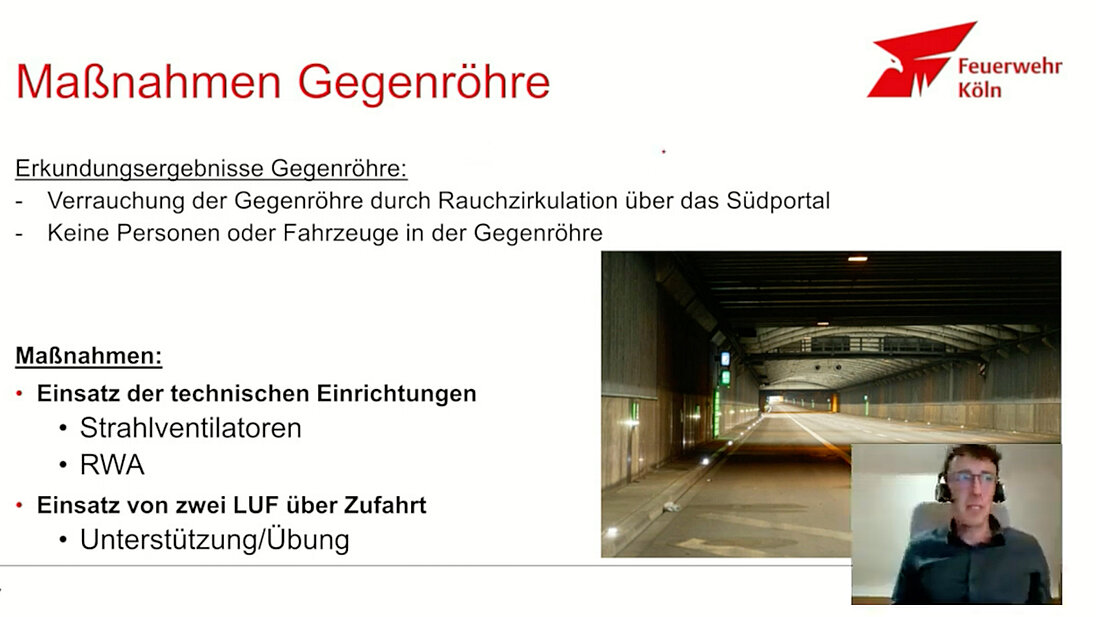
Tunnel and tactical information is helpful
During the debriefing, the firefighters found the basic information on tunnel tactics, which had been prepared by the Cologne Fire Service as part of the operational preparations, and the information on the tunnel itself to be helpful. Both gave them a sense of safety during the incident. It also applies to general orientation, as one challenge of the Lövenich Tunnel, for example, is that it has ten access points where fleeing people can exit the tunnel.